

Protests rocked some major cities of the federation as Nigerians stuck to their resolve to mark the first-year memorial in honour of the victims of the Lekki Massacre during the #EndSARS protest. The result was not any different from the many other protests we have had since the invention of protests. Greeted with a flagrant disregard for human rights and dignity, scores of protesters, passersby, and journalists were forced into waiting taskforce vans and driven off to various police stations.
The EndSARS protests came at a time the world was seven months into the scourge of the COVID-19 pandemic. Many states in Nigeria were under some form of restrictions to movement and gathering. Some had already relaxed the restrictions. However, there was an intense fear of a second wave. This article looks into the interplay between COVID-19 and the EndSARS protests. Despite being isolated events, they influenced each other.
The EndSARS Protests
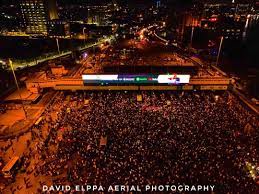
The EndSARS protest was one of the largest series of demonstrations in the history of the world’s largest black nation. For the first time in a long time, Nigerian youths unitedly called for the disbandment of the rogue Special Anti-Robbery Squad. The military soon quenched the blazing spirit with the Lekki Massacre on October 20, 2020, later christened 20-10-20.
The extra-judiciary killing of a man in Ughelli by officers of SARS around October 3 triggered the protests. However, the EndSARS tag has been around since 2017. While we cannot establish the circumstances surrounding its introduction, we can be sure it was something about police brutality at best and extra-judiciary killings at the worst.
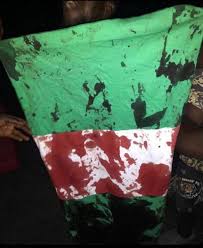
The EndSARS movement saw thousands of youths online and offline within and outside the country campaigning for the disbandment of SARS over the wanton brutalisation of innocent youths, irrational profiling, extortion, and killings.
The COVID-19 Pandemic
Read Also: What We Know About COVID-19 So Far
COVID-19 made its way into the shores of Nigeria and was soon widespread enough to necessitate certain restrictions in almost all states of the country.
Towards the end of August last, the rate of daily cases of COVID-19 dipped significantly. It was like that till the first week in December when it spiked again.
The incubation period of COVID-19 is 2-14 days. This means one might not show symptoms of having the disease until after two days or up to 14 days. Most people were even asymptomatic. This meant people could spread the disease without even knowing they had it. A small population came down with a dry cough, fever, sore throat, tiredness, diarrhoea, loss of taste or smell, and body ache. Severe cases had difficulty in breathing, and some other people succumbed to the disease.
So far (20-10-21), there have been 210,000 cases of COVID-19 and 2,838 deaths. While we seem to be out of the woods already with declining figures and increasing vaccination coverage, we are not clear yet.
COVID-19 and the EndSARS Protests: The Interplay
The COVID-19 Pandemic and EndSARS protest had some interplay. The Presidential Task Force headed by Boss Mustapha and the Director of the NCDC, Dr Chikwe Ihekweazu, mentioned that the protest could lead to spike in the number of cases.
Undoubtedly, The pandemic helped in some regard but was an immense risk, on the other hand, seeing the health scenes in the US, India, and Brazil who recorded the highest number of casualties. Even worse, countries that seemed to have tamed the wildfire soon stated witnessing a second wave of the virus necessitating reinstitution of already relaxed restrictions.
Aerial views of the scenes revealed it was basically impossible to have complied with COVID-19 guidelines during these widespread protests, especially social distancing. It was ordinarily irrational that Nigerian youths would be violating the COVID-19 restrictions and guidelines, jeopardising the already failing health sector. Attempts at enforcing face marks also proved abortive as protesters could not compile standing or walking for long hours with it. Many protest grounds also had hand sanitisers for protesters.
Whether or not these measures were effective remain uncertain. As earlier stated, the incubation period of COVID-19 is 2-14 days. So we can check if there was a spike in the number of new cases during the strike and 14 days after. The protests started in Lagos on October 7. Between this time and the eventually gruesome and unofficial termination of the protests, the highest number of new cases recorded was 225 cases on October 13, 2020. The next major spike was on December 1, 2020, many weeks after the protests had decimated, and we were still mourning our dead.
Essentially, the EndSARS protest was not a flimsy excuse to be on the streets but a worthy course. On the other hand, we can establish that there were more deaths across the states from attempts to suppress the protest than from the deadly COVID-19 during the same period.
Twelve deaths were recorded from COVID-19 during the protests from October 7 till October 21. In fact, the 7-day death average oscillated between 0 and 2 even a month following the protests. On the other hand, the Lagos #EndSARS panel received autopsy reports of up to 99 persons whose bodies were deposited at the Lagos during the protests. Three of those bodies were from the Lekki Massacre. Fisayo Soyombo later tracked down some victims of the massacre at the toll gate and uncovered that there were at least 21 lives lost. This does not take into account the heroes like Jimoh Isiaq and many other victims within and outside Lagos State.
Babajide Sanwo-Olu, the Lagos State Governor, attributed the survival to God’s assistance while the state battled COVID-19 in the face of the protest. It is unclear if the protest had a significant influence on the COVID-19 figures. Even if it did, there was no backing down for these relentless youths.
Meanwhile, Professor David Olaleye, a virologist at the University of Ibadan, noted that there might have been a more significant hike in the number of cases if more people had been tested. Scholars like Professor Emeje and Professor David Olaleye called for studies on the effect of the protest on the spread of the virus to help protesters exercise caution.
The lockdown probably played the largest role in the availability of youths for the protests. Most people were working from home, schools shut down, and ASUU was even doing their own to contribute to the misery. There was a lot to be angry about and a lot of free time while contributing to a worthy cause.
Finally, there were many incidences aimed at marring the pure intent of the EndSARS protests. Of the numerous reports, there was one about the looting of some World Health Organisation’s stores. The African Regional Director of WHO, Dr. Matshidiso Moeti, stated that some personal protective equipment (PPEs) were stolen from their office. This was in response to a question concerning the effect of the EndSARS protest, riots, and looting on Nigeria’s fight against COVID-19.
Wrapping up: The Interplay Between COVID-19 and the EndSARS Protests
We will never understand the level of interplay between COVID-19 and the EndSARS protest, thanks to the paucity of data and low testing volume. However, despite the fact that a larger proportion of Nigerians got exposed to COVID-19, more people died from protesting against avoidable deaths than the pandemic during the EndSARS protest.
Follow Naija.fm on our social media handles Facebook, Instagram, and Twitter to keep up with trending news, breaking news, entertainment news, and hot gist.


