
There is a whole lot about COVID-19 that we don’t – scientists and the general public alike. The happenings over the last 20 months could have passed for a plot for a stellar dystopian movie or novel. Not only was it unthinkable that a disease would shut down countries and their economies, but that the health sector will be clueless and almost helpless.
There have been a lot of lessons from the COVID-19 pandemic – either about the virus itself or other things we have realized. For example, the COVID-19 pandemic opened new frontiers in virtual education and remote jobs (work-from-home).
This article is a basic summary of what COVID-19 is as simply as we can make it. In the next series of articles, we will be exploring the story so far, starting from the very beginning to vaccination and all we currently know about COVID-19. Stick along.
Down to Wuhan, Where It All Started

Read Also: COVID 19: Nigeria Set to Lift Travel Ban on South Africa and Brazil
We start our story at Wuhan. Once upon a time, in Wuhan, the capital and largest city of Hubei Province, a number of people came down with “pneumonia from an unknown source”. The Chinese health authorities informed the World Health Organisation on New Year’s Eve, 2020. However, the Chinese health authorities said they did not find any proof that the disease was spreading from person to person.
They mentioned that the patients had a fever associated with difficulty in breathing. Their chest x-rays revealed some lung lesions. Understandably, this picture is similar to pneumonia. By 6th January, there were about 59 cases, while 121 contacts were under monitoring. A good number of these patients worked at a seafood market. The market was sanitized, and the affected people were quarantined.
A 61-year-old man went to Wuhan’s live animal market and came down with the said pneumonia. He died on 11th January 2020, making him the first to succumb to the disease. It was the first tug on the ear that we were dealing with something sinister.
Between 20th and 21st January, COVID-19 was already in the US, Japan, Thailand, and South Korea, as the first confirmed cases were recorded. A couple of days later, the Chinese government instituted strict restrictions in Wuhan – shut down flights, trains, subways, ferries, and even buses. As we can now tell, it was already too late.
On 30th January 2020, WHO announced that the Coronavirus was a public health emergency of international concern for only the sixth time ever. It joined the lean list, including Zika virus, Ebola, Yellow fever, polio (the oldest), and the 2009 H1N1 influenza pandemic. It was, however, not declared a pandemic until March.
Nigeria’s first case of COVID-19 was confirmed in Ogun State on 27th February 2020. It was an Italian citizen who arrived in Lagos from Milan, Italy, three days earlier. He then travelled to his company’s site in Ogun State, where he took ill and presented at the company clinic. He was referred to the Infectious Disease Clinic in Lagos. This made Nigeria the third country in Africa to confirm an imported case of COVID-19 after Egypt and Algeria.
The story pretty much tells itself from here on.
Between Wuhan and Now, what are the COVID-19 Figures?
As of 5:56 pm on 14th October 2021, there have been 208,404 confirmed cases, with 9,520 active cases and 2,761 deaths, according to the NCDC. Lagos State leads the pack with 77,239 cases and 664 deaths. On the other hand, there have been 219 million confirmed cases across the world, leading to 4.55 million deaths.
Various studies have shown that the outcome is among adults, especially 60 years and above, according to a study among Nigerians.
What Is this Pneumonia of Unknown Cause, AKA Coronavirus?
Coronavirus, Wuhan coronavirus, and Wuhan pneumonia were some of the first names for COVID-19. However, sometime in February 2020, the World Health Organisation decided to Christian it COVID-19 and SARS-CoV-2. This was to prevent the social stigma, and bad PR Wuhan could possibly get.
CO stands for Corona, VI for virus, and D for disease. The “19” denotes 2019, the year the disease outbreak started.
SARS-CoV-2 stands for Severe Acute Respiratory Syndrome CoronaVirus 2.
SARS-CoV-2 is a novel severe acute respiratory problem that is thought to be closely related to SARS-CoV, a disease found among animals. When it is outside the human body, the virus can be destroyed by soap which is why handwashing has been a mainstay in the prevention of the disease.
How does COVID-19 cause problems?
There is still a lot that scientists don’t know about COVID-19 and its pathophysiology. However, what we know already is enough to be a textbook.
About COVID-19 and its Transmission
The virus is mostly transmitted when people inhale respiratory droplets from people who have a virus. Loosely put, it is like breathing in air contaminated by an infected person’s droplet. The close the infected person is to a normal person, the higher the chances of transmission. This is why social distancing was another mainstay in the prevention of the spread.
About COVID-19 and its Pathophysiology
This virus has been found to affect various cells in various tissues and organs of the body within and outside the respiratory system. This also gives reasons for why some have certain symptoms and others don’t.
The lungs are still the most affected organs as the virus easily gains access to the host cells through the ACE2 receptor. ACE2 stands for angiotensin-converting enzyme-2. A lot of these receptors are found on the surface of some cells called type II alveolar cells. This infiltration cause cough and difficulty in breathing.
Let us skip the scientific nonsense and move into the basic effect of the virus in various systems outside the airway.
The nervous system (the brain, spinal cord, and nerves) – Prominently, it affects the olfactory epithelium which is responsible for the smell. Although the virus itself has not been detected in the brain, it is known to cause neurological and mental problems. It has, however, been found in the spinal fluid, but scientists don’t know how it gets there.
The Gut – Remember ACE2? They are also found in the stomach and intestine. So, the virus also affects the gut.
The Cardiovascular System – that is, the heart and blood vessels. ACE2 receptors are also graciously found in the heart. The virus can cause a heart attack and is commonly found in people with severe diseases. It can lead to a blood clot and blood vessel damage.
In addition, COVID has also been found to affect the kidneys, which is a common cause of death in severe cases.
How Do You Get Tested?
A diagnostic test can be carried out based on suspicion (symptoms or contact with an infected person) or a routine check. There are various WHO-recognized testing protocols.
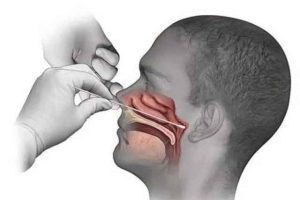
The nucleic Acid Test is the common test you might have seen or done. It involves inserting a nasopharyngeal swab into your nose.
There are various serological tests that can detect the viral antibody.
Chest X-rays and CTs are not used for routine screening but could be a pointer to a possible infection based on some findings.
Also, artificial intelligence-based image processing tools are being worked on to analyze chest images to detect COVID, even in asymptomatic people. There is also an AI model that uses cell-phone recorded coughs to detect asymptomatic COVID-19.
In our next article, we will consider the preventive measures for COVID-19, vaccine and vaccine hesitancy. Stay tuned.
Follow Naija.fm on our social media handles Facebook, Instagram, and Twitter to keep up with trending news, breaking news, entertainment news, and hot gist.


